Home Staging Cost: What Sellers Actually Pay and Whether It's Worth It
The average home staging cost in the U.S. ranges from $832 to $2,922, with a median around $1,849 according to HomeAdvisor data. But numbers alone miss the point. A vacant 2,000 sq ft colonial costs dramatically more to stage than a furnished one-bedroom condo—sometimes thousands of dollars more, because one's empty and one isn't.
This guide walks through home staging costs across every option: professional staging, DIY, and virtual. You'll see costs by room, by home size, and by market, plus how to figure out which method actually makes sense for your listing.
Quick look at costs: Most sellers spend 0.5% to 1% of their asking price on staging. For a $350,000 home, that's $1,750 to $3,500 for professional staging. Occupied home staging: roughly $800. Vacant: $2,000 to $5,000+. DIY: $0 to $300. Virtual staging: $16 to $50 per photo, or under $1 with AI. Staged homes typically sell faster and for 5% to 15% more than unstaged ones.
What does home staging cost? Real numbers
Here's what sellers actually pay for professional staging:
- Initial consultation: $100 to $250. The stager walks through, assesses what needs work, and makes recommendations.
- Occupied home staging: Around $800 on average. The stager rearranges your furniture and brings in a few rented pieces like throw pillows or artwork.
- Vacant home staging: $2,000 to $5,000+. The cost depends on how many rooms you stage and the square footage. Everything is rented.
Bankrate suggests budgeting about 1% of your listing price. That's $3,500 for a $350,000 home, or $5,000 for a $500,000 home.
One cost catches sellers off guard: ongoing furniture rentals. Most companies charge $500 to $600 per room per month. If a three-room staging takes two extra months to sell, that's another $3,000 to $3,600.
Is home staging worth the cost?
For most sellers: yes.
The NAR 2025 Profile of Home Staging found that 29% of sellers' agents saw a 1% to 10% price bump on staged listings. Nearly half reported faster sales. And 83% of buyers' agents said staging helped buyers picture themselves in the home.
Real dollars: sellers who spend about 1% of their asking price on staging typically see a 5% to 15% return over asking about 75% of the time, according to the Real Estate Staging Association. Coldwell Banker reports 6%+ over asking for staged homes.
Example: you sell a $400,000 home and invest $4,000 on staging. If it sells for just 6% more, that's $24,000 extra on a $4,000 investment. You break even at the low end, come out far ahead at the high end.
Speed matters. Homes sitting on the market lose momentum. Buyers wonder why. Price cuts happen. Staging stops that downward spiral. NAR's research shows one in three buyers' agents say their clients are more likely to book showings after seeing staged photos online.
Not every home needs staging. In hot markets where homes sell in 48 hours, physical staging might waste time and money. But even then, cheap virtual staging can lift your listing photos above the rest.
Staging costs room by room
Not every room has the same impact. Buyers spend the most time in living rooms and kitchens. Primary bedrooms matter too. Bathrooms and secondary bedrooms help your listing photos, but don't move the needle as much.
Professional staging costs per room for vacant homes:
| Room | Staging Cost (Vacant) | Impact on Buyers |
|---|---|---|
| Living room | $500 – $2,000+ | Highest. First room buyers focus on in photos and showings. |
| Kitchen | $500 – $2,000+ | High. Buyers decide within seconds whether the kitchen "works." |
| Primary bedroom | $400 – $1,000 | High. Buyers need to picture themselves in this space. |
| Dining room | $300 – $800 | Moderate. Helps define the space, especially in open floor plans. |
| Secondary bedrooms | $200 – $600 each | Moderate. Matters more for family buyers. |
| Bathrooms | $100 – $300 each | Lower. Accessories and towels make the biggest difference here. |
For occupied homes, costs drop because the stager works with your existing furniture, just rearranging and adding accents like pillows or plants. Expect $100 to $400 per room.
Do you need every room staged? No. On a tight budget, stage the living room, kitchen, and primary bedroom. These are the first rooms in listing photos and the ones that stick with buyers during showings. RubyHome's data backs this up—living rooms are what agents recommend staging most.
Cost of staging by home size
Square footage is one of the biggest cost drivers. Here's what two common home sizes cost to stage, based on national averages:
| 1,000 Sq Ft Home (2-Bed / 1-Bath) | 2,000 Sq Ft Home (3-Bed / 2-Bath) | |
|---|---|---|
| Consultation | $100 – $200 | $150 – $250 |
| Occupied staging | $500 – $1,200 | $1,200 – $2,500 |
| Vacant staging (full) | $1,500 – $3,000 | $3,000 – $6,000 |
| Monthly rental extension | $1,000 – $1,500/mo | $2,000 – $3,000/mo |
| Virtual staging (all key rooms) | $50 – $150 | $80 – $250 |
| AI virtual staging | Under $5 | Under $10 |
| DIY staging | $100 – $250 | $200 – $400 |
Cost to stage a 2,000 sq ft home
A three-bedroom, 2,000 sq ft home is the most common case. Here's how costs work out.
For professional staging, you'd stage the living room, kitchen, primary bedroom, and one secondary bedroom. That's four rooms of rented furniture and decor. Budget: $3,000 to $6,000 upfront, plus $2,000 to $3,000 per month in rental fees if the home sits.
Timeline: one to two weeks from consultation to installation. Removal happens after you close.
DIY staging for the same home: $200 to $400. Paint a couple rooms neutral, add new pillows and bedding, throw in some plants, improve the lighting. You're working with what you own and making targeted changes.
The range is huge. DIY plus AI virtual staging photos: under $300 total. Full vacant staging through a pro company: $6,000 or more. Everything in between exists.
We worked with a seller who had a place (roughly 2,000 square feet) in a typical suburban neighborhood, listed at $425,000. The thing sat empty for three weeks. Photos looked bare. Nobody was calling.
They brought in a staging company to handle four rooms: living room, kitchen, the master bedroom, and a second bedroom they set up as a home office.
The costs added up like this:
- Consultation: $200
- Delivery and setup: $1,100
- Furniture rental for those four rooms: $3,800 for the first month
- Monthly extension when the house stayed on market another six weeks: $2,400
- Total: roughly $7,500
After staging, they pulled the listing, shot new photos, and put it back up. The showing requests started coming in the first week. Eighteen days later, it went under contract at $438,000—thirteen grand over asking.
Did staging account for the entire price bump? No clue. But we could not deny the correlation: zero offers and almost no traffic, then three offers in two weeks.
Does location affect the cost of staging?
Yes, location matters a lot. A $2,000 staging job in the Midwest runs $5,000+ in New York or Los Angeles.
High-cost markets (NYC, SF, LA, Boston, Seattle): Professional staging starts at $3,000 even for small homes. Furniture rental companies charge more, and stagers' fees are higher due to cost of living. Full vacant staging for a 2,000 sq ft home in Manhattan or the Bay Area: $6,000 to $10,000 or more.
Mid-range markets (Denver, Austin, Nashville, Charlotte): Costs match national averages. Three-bedroom full vacant staging: $2,500 to $5,000. The ROI is strongest here—home prices justify the investment, but staging doesn't cost as much as coastal markets.
Lower-cost markets (smaller cities, rural, suburbs): Professional stagers exist but are harder to find. Full vacant staging for 2,000 sq ft: $1,500 to $3,000. The catch: lower home prices mean the return math is tighter. Spend $3,000 on a $200,000 home and you need a bigger price bump to break even.
Virtual staging eliminates geography. It costs the same whether you're in Manhattan or Iowa.
DIY staging for budget sellers
Not every seller needs a professional. If you're in a strong seller's market and the home is decent, DIY can work for free or under $300.
Here's what actually helps:
Declutter and depersonalize (free). Take down family photos, move out extra furniture, get rid of anything that makes rooms feel crowded. This one action has the biggest impact of anything you can do. Buyers need to see themselves in your space, not you.
Paint neutral colors ($30 to $150 per room). A fresh coat of neutral in rooms with bold or dated colors makes the space feel newer and move-in ready. Use warm whites or light grays. Skip accent walls.
Better lighting ($0 to $100). Replace dim fixtures. Open all curtains during showings. Add a floor lamp to dark corners. Light makes rooms bigger and more welcoming.
Rearrange your furniture (free). Pull furniture away from walls. Remove pieces that crowd. Create open pathways. Make every room feel as open as possible.
Small finishing touches ($50 to $100). Fresh white towels in bathrooms. A new doormat. A bowl of fruit on the counter. A few plants. These things photograph well and show care.
Total DIY budget: $0 to $300. Will it match a professional? No. But it's much better than listing a cluttered, dark home with no effort at all.
Virtual staging: cheaper than physical
Many sellers choose virtual staging for photos without the four-figure bill.
Virtual staging costs way less than physical. A designer-based service charges $16 to $50 per image. For eight to twelve listing photos, that's $128 to $600. AI-powered virtual staging costs under $1 per render. Desiome can stage an entire home's photo set for under $10.
Here's how they compare:
| Factor | Physical Staging | Virtual Staging |
|---|---|---|
| Cost per room | $500 – $2,000+ (vacant) | $16 – $50 per image |
| Full home (5 rooms) | $2,000 – $8,000+ | $80 – $250 (designer) or under $10 (AI) |
| Timeline | 1–2 weeks | Same day (AI) or 3 days (designer) |
| Monthly rental fees | $500 – $600/room/month | None |
| In-person showings | Real furniture. Strong. | Empty rooms. |
| Listing photo impact | Strong | Strong (looks real) |
| Style flexibility | One arrangement | Many styles, no extra cost |
| Best for | High-end vacant homes | Most homes, budget sellers, agents |
The catch: virtual staging only works in photos. When buyers show up, rooms are empty. But 97% start their search online, so the photos carry the weight.
Not sure if virtual staging is right for your listing? Our guide to virtual staging for real estate breaks down how it works, where it shines, and what to watch for.
If you're comparing virtual staging platforms, prices vary. Designer services like BoxBrownie charge around $24 per image. AI platforms go under $1, with instant results and the ability to test different styles at no extra cost.
Cut your cost of home staging by 90% using Desiome AI Virtual Staging
Desiome Virtual Staging AI is a modern, budget-friendly alternative to traditional staging. No consultation costs with multiple furniture styles to choose from. All under 2 minutes.
Choose your staging method
There's no one right choice. It depends on price, property type, market, and timeline.
| Your Situation | Best Approach | Why |
|---|---|---|
| Vacant home, $400K+ | Professional physical | Buyers respond to real staging. ROI works at this price. |
| Vacant home, under $400K | Virtual staging (AI or designer) | Professional staging takes too much profit. Virtual gets photos right for less. |
| Occupied home, good shape | DIY + virtual photos | You have furniture. Clean it, declutter, arrange it. Virtual staging enhances the photos. |
| Occupied home, dated/cluttered | Paid consultation + DIY | Pay $100–$250 for expert advice. Execute it yourself. |
| Hot market (homes sell in 2 weeks) | Virtual staging only | Listing photos sell. Don't waste $5K on staging if it's flying. |
| Slow market (30+ days on market) | Professional staging or relist | Refresh the listing. Either invest in physical staging or pull it, get new virtual photos, relist. |
| Budget under $500 | DIY + AI virtual staging | Free decluttering plus AI photos. Under $100 total. |
Two questions decide it: How much of your sale price are you willing to spend? Occupied or vacant?
For occupied homes: DIY plus virtual staging photos. You own furniture already. Declutter, arrange it, and let AI handle the photos.
For vacant: choose between $2,000 to $5,000+ on physical or $50 to $200 on virtual. Above $400,000 in a competitive market? Physical staging pays. Below that? Virtual staging wins on cost per dollar.
FAQ: Common Questions About Home Staging Cost
How much does home staging cost on average? The national average is around $1,849. Most sellers pay $832 to $2,922 for professional physical staging. Occupied homes with existing furniture: around $800. Virtual staging: $16 to $50 per photo, or under $1 with AI.
Is home staging worth it for a $300,000 home? Maybe. The method matters. Spending $3,000 on physical staging for a $300,000 listing is a tighter bet. You need at least a 1% price bump to break even. Virtual or DIY plus virtual photos often pays better here because the upfront cost is much lower.
Can I stage my home myself? Yes. DIY works best for occupied homes in decent shape. Declutter, depersonalize, improve lighting, rearrange furniture. Budget $0 to $300. Won't match a professional, but it beats no staging.
What is the cheapest way to stage a home? AI virtual staging. Stage your whole photo set for under $10. Add free DIY work (declutter, clean, rearrange) and you've got a complete strategy for under $50.
Does the seller or agent pay for staging? Typically the seller. But some agents offer to pay or split costs as a listing perk, especially in competitive markets where they're competing for your business. Ask your agent about this up front.
How long does staging take? Professional physical: one to two weeks from consultation to installation. AI virtual: minutes. Designer virtual: one to three days. DIY: depends on scope, but usually a weekend.
Bottom line
Home staging costs range from free (DIY decluttering) to $6,000+ (full vacant staging in a major city). The numbers show staging pays for itself in higher prices and faster sales—if you pick the right method.
For most sellers in 2026, the winning formula is simple: do the free DIY work first (declutter, clean, paint), then add virtual staging photos to compete with professionally staged listings. You get most of the visual impact for a fraction of the cost.
If you're selling a high-end vacant home in a competitive market, professional staging makes sense. Everyone else benefits from DIY plus AI virtual staging—which costs way less than it did two years ago.
Read more
You might be interested in the following articles:
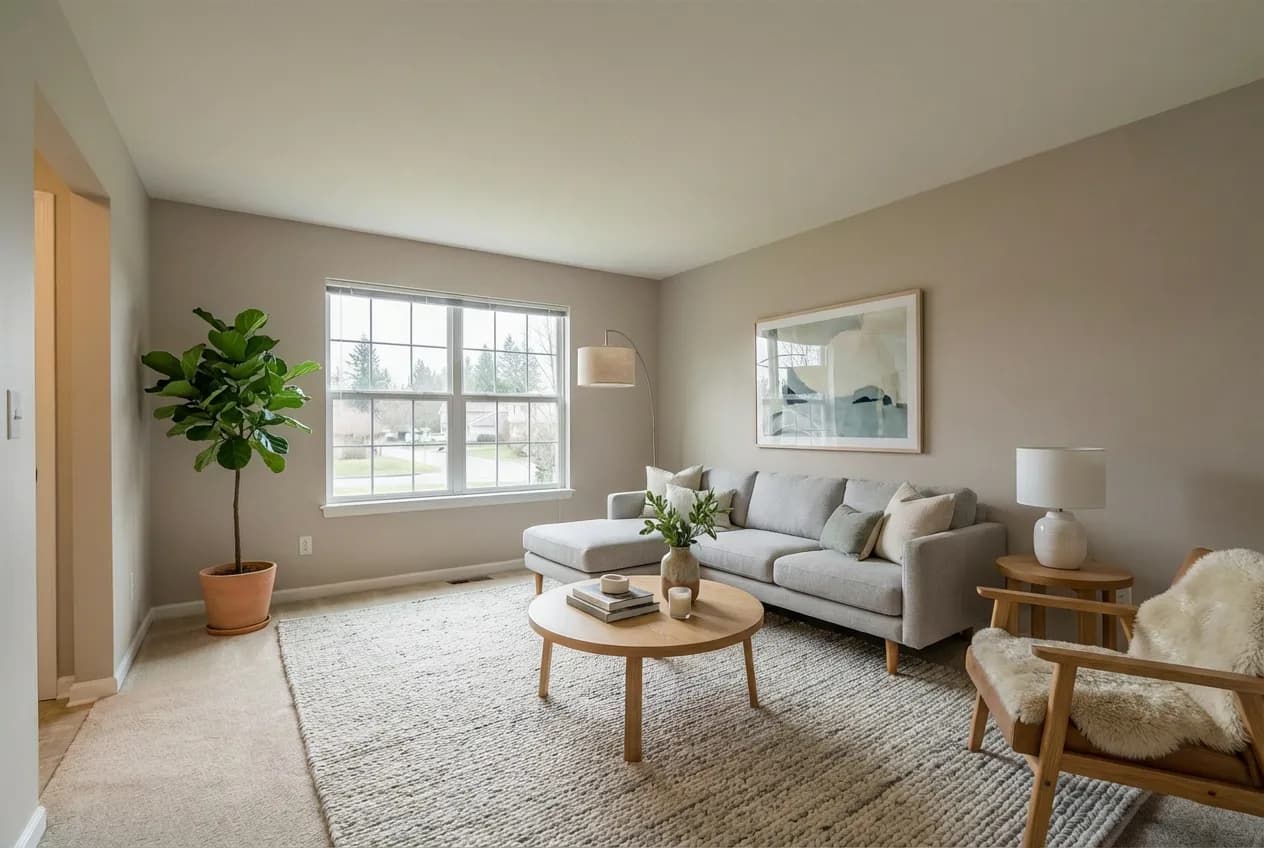
What is virtual staging? A guide for real estate
What is virtual staging in real estate? Learn how AI virtual staging works, when to use it, and how to create listing photos that feel lived in.
Ultimate Guide to Virtual Staging for Real Estate: Expert Tips for Realtors
Discover how virtual staging and AI tools are transforming real estate marketing. Learn expert tips to showcase properties faster, cheaper, and more effectively.
Top 5 Virtual Staging Software Tools in 2025
Discover the top 5 virtual staging software tools in 2025. Compare features, pros, cons, and pricing to find the right fit for your listings.